Civilian MREs: what they are, where to buy, and shelf life
What a civilian MRE actually is, whether MREs are legal to buy, how long they last, and whether they belong in your emergency food plan.

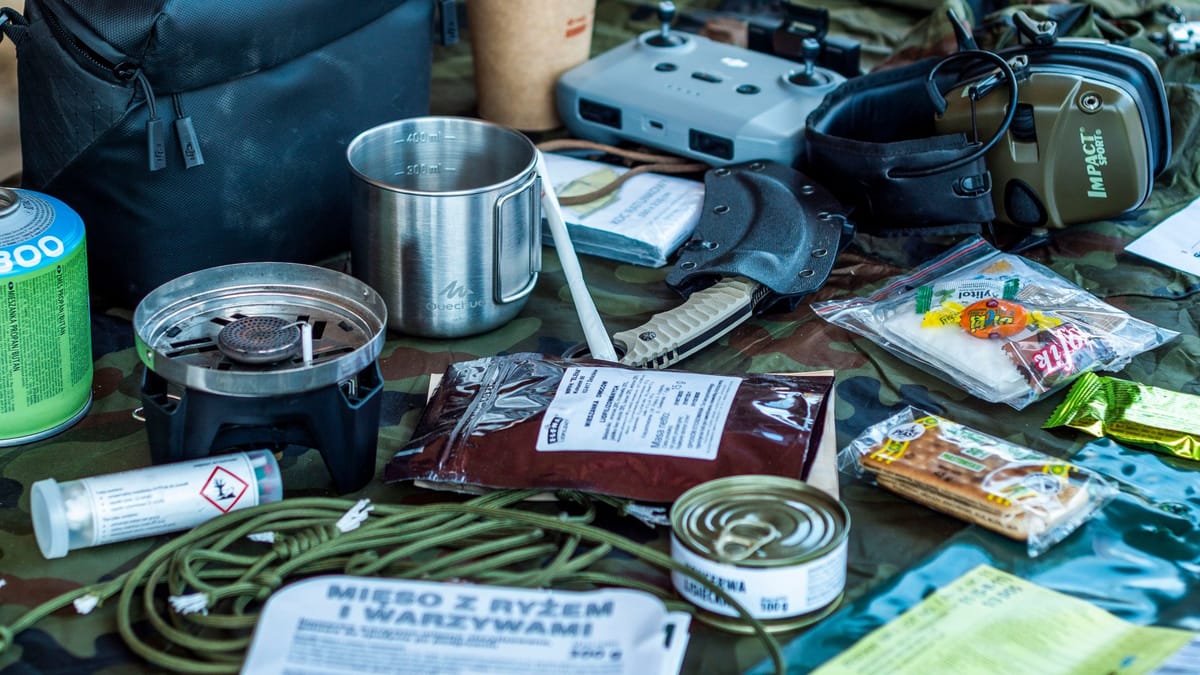
MRE stands for "Meal, Ready-to-Eat." It's the U.S. military's individual field ration, and it has become a staple of the prepper pantry for one simple reason: you get a complete, shelf-stable meal in a pouch that needs no stove and no refrigerator. Here's what a civilian MRE actually is, whether MREs are legal to buy, how long they last, and whether they belong in your own food plan.
What is an MRE?
An MRE is a single complete meal packed in a tough tan or brown foil pouch. It replaced the old C-ration and the MCI that came after it, and every pouch is built around a main entree plus a pile of extras. A typical MRE holds the entree, a side dish, crackers or bread, a spread like cheese or peanut butter, a dessert, a powdered drink mix, and an accessory pack with a spoon, napkin, matches, salt, pepper, and gum.
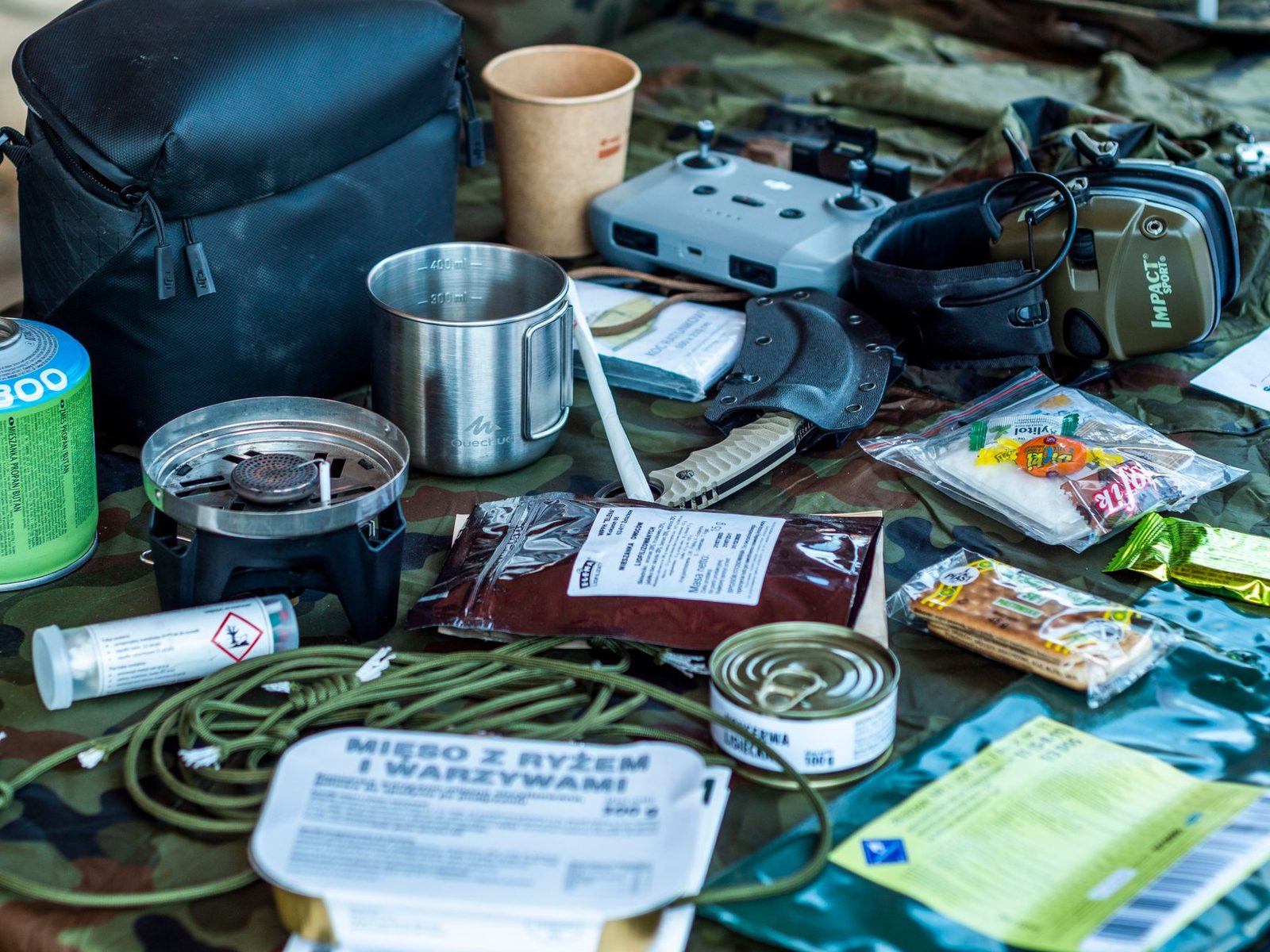
Each meal lands around 1,200 to 1,300 calories. Three meals a day are meant to keep a soldier going in the field, which is more than enough food for the average adult sitting out a storm at home.
The clever part is the flameless ration heater, usually called an FRH. You slide the entree pouch into the heater, add a small amount of water, and a chemical reaction warms the food in a few minutes. No stove, no fire, no fuel. That's the detail that makes MREs useful in a power outage or on the road.
You can eat the whole thing cold if you have to. The entrees are fully cooked before they're sealed, so the heater is a convenience, not a requirement. If water is short, skip the heater and eat the entree straight from the pouch.
Are MREs illegal for civilians?
This is the question that keeps showing up in searches, and the answer is no.
The confusion comes from a label printed right on the military packaging: "U.S. Government Property, Commercial Resale is Unlawful." People read that and assume it's illegal for a civilian to buy or own an MRE. It's not. That label is aimed at the supply chain. It restricts unauthorized resale of government-issued property, but there's no federal law that makes it a crime for a private citizen to buy, own, or eat a military MRE.
Military MREs do reach civilians through legitimate channels. The government regularly clears out surplus and aging stock, and those rations get sold off through official liquidation and auction routes. On top of that, a whole industry makes civilian MREs, which are commercial equivalents produced specifically for the public. Those are fully legal and sold by the case online and in outdoor and emergency supply stores.
The practical takeaway is not about legality. It's about quality. Buy from a reputable seller, check the date code on the case, and pass on any pouch that is swollen, punctured, or clearly heat damaged.
Military vs. civilian MREs
Military MREs are the real thing: tan pouches, full menus, a heater in every meal, and a date code printed on the case. They're produced under military specification and built to survive rough handling and a range of temperatures.
Civilian MREs are commercial versions made for the public market. Some are nearly identical to the military product. Others are "self-heating meals" or emergency rations that look and work the same way but use different menus and packaging. Civilian cases are sometimes fresher and easier to buy in small quantities, but they can also cost more and occasionally skip the heater or the accessory pack, so read the listing before you order.
For most preppers the difference matters less than it sounds. Both give you a hot meal with no kitchen. Military surplus tends to win on price per meal and ruggedness. Civilian cases tend to win on variety and on not being tied to whatever the surplus pipeline happens to have.
How long do MREs last?
Shelf life comes down to temperature. The military's own guidance is that MREs keep for about three years at 80 degrees Fahrenheit, and considerably longer when stored cooler. Heat is the enemy. A case left in a hot garage or a car trunk through a summer will degrade fast, while the same case in a cool, dry basement can stay good for years past the printed date.
Military cases carry a time-temperature indicator, a small circle printed on the box that darkens as the ration ages. The darker the circle, the older the stock, and that's the thing to check before you hand over money for surplus. Civilian cases usually carry a printed best-by date instead.
Store your cases the same way you would any long-term food: cool, dry, dark, and off the concrete floor. Rotate them into your regular meals or camping trips so your stock never quietly expires.
Where MREs fit in your food plan
MREs are not a replacement for a deep pantry. They're heavy for the calories, salty, and expensive per meal compared to rice and beans. What they buy you is convenience: a hot meal with no cooking setup, no water for the food itself, and no cleanup.
That makes them a good fit in three places. First, the bug out bag, where a couple of pouches replace a stove and fuel. Second, the car kit, where they sit through temperature swings until you need them. Third, the short-term emergency shelf, for the first few days of an outage before you want to start cooking.
For the rest of your plan, think of MREs as one layer. FEMA's food guidance starts from the baseline of keeping at least three days of non-perishable food on hand, and its water guidance covers the drinking water you still need even when your meals come sealed in a pouch. If you're building out a full emergency supply kit, MREs slot in cleanly alongside the rest of it.
What to look for when buying
Before you spend money, check these four things.
- Date code or indicator. On surplus, read the time-temperature indicator and the production date. On civilian cases, check the best-by date.
- Intact packaging. Pass on swollen, punctured, or rust-stained pouches.
- A heater in each meal. Some civilian cases skip the FRH. Confirm before you order.
- Menus you will actually eat. A stockpile nobody wants to open is dead weight.
Start small. Buy a single case, eat a few meals, and only then commit to a larger order.
If you want to start with one purchase, a case of civilian MREs from a well-reviewed emergency supply retailer is a solid first step. Pick a case with menus you will actually eat, because a stockpile nobody wants to open is just dead weight.
MREs will not solve your food plan on their own, but they fill a real gap: a hot meal with no kitchen. Keep a few pouches in your bag and a case in your pantry, and you have one less thing to figure out when the power goes out.