Prepper water purification: boiling, bleach, distillation
Boiling, bleach, and distillation are the three ways to make questionable water safe to drink, with the exact doses and times from EPA and Ready.gov guidance.

Water is the first thing to fail in a disaster. Pipes break, treatment plants lose power, wells flood, and the tap either stops or runs brown. Store water, and store a lot of it, but stored water runs out. At some point you will look at a pond, a rain barrel, or a faucet you do not trust and have to decide whether to drink from it. This guide covers the three ways to make water safe: boiling, chlorine bleach, and distillation. Most water filter guides skip this part.
Store water first, treat water second
Purifying water is the fallback. Having clean water put away before anything happens is what keeps you out of trouble. The rule from Ready.gov is one gallon per person per day, for drinking and sanitation, for several days. A normally active person needs about three quarters of a gallon of fluid a day. Children, nursing mothers, and anyone sick need more, and hot weather can double the need.
For storage: buy commercially bottled water and leave it sealed in a cool, dark place. If you fill your own containers, use food grade containers, wash them with dish soap, then sanitize with one teaspoon of unscented household bleach per quart of water. Water you bottle yourself should be swapped out every six months.
If you have not stored water yet, do that before you spend another minute on purification. Purification is what you reach for when the stored water is gone or you are away from it.
Know what you are treating
Bad water is not one problem, and the fix depends on what is wrong.
Biological contamination means germs: bacteria, viruses, and parasites. They cause dysentery, cholera, typhoid, and hepatitis. This is the usual problem after a flood or a pipe break, and it is the one boiling and bleach solve.
Chemical contamination is a different animal. Heavy metals, salts, fuel, pesticides, and industrial runoff do not boil away and are not killed by bleach. The EPA says this outright: boiling and disinfection do not destroy heavy metals, salts, and most other chemicals. If the water smells like fuel, has an oily sheen, or you have reason to think chemicals reached the source, you need distillation, a filter rated for chemicals, or a different source.
Figure out which problem you have before you pick a method.
Boiling
Boiling is the safest method. Default to it.
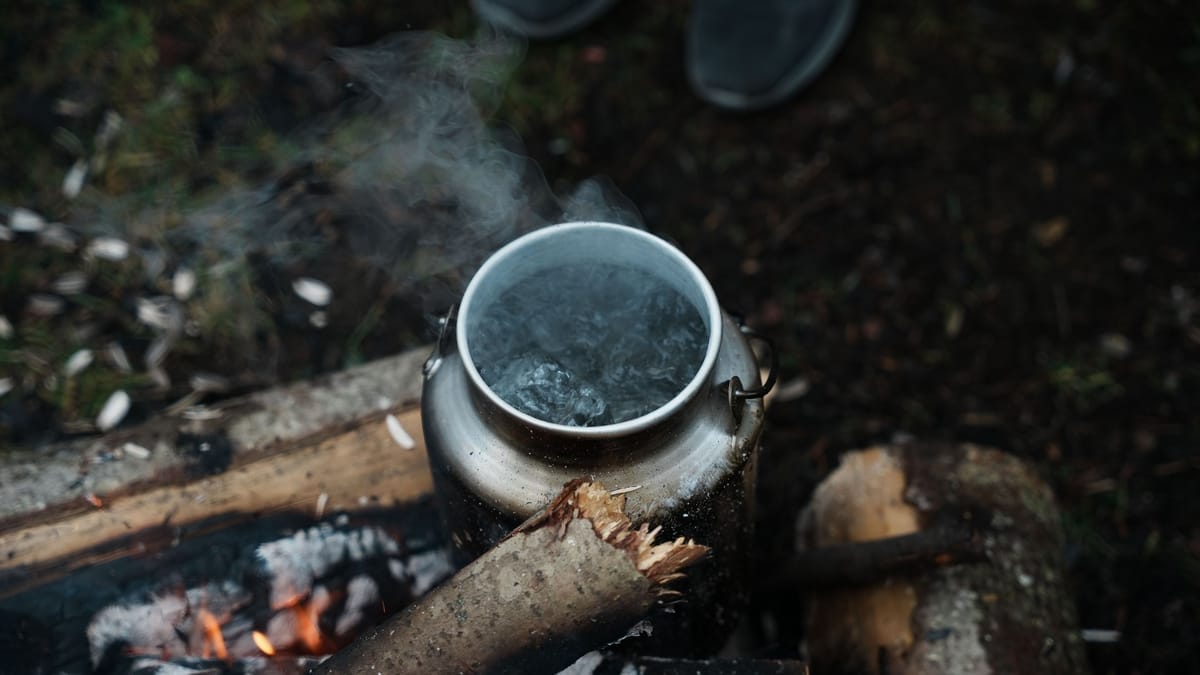
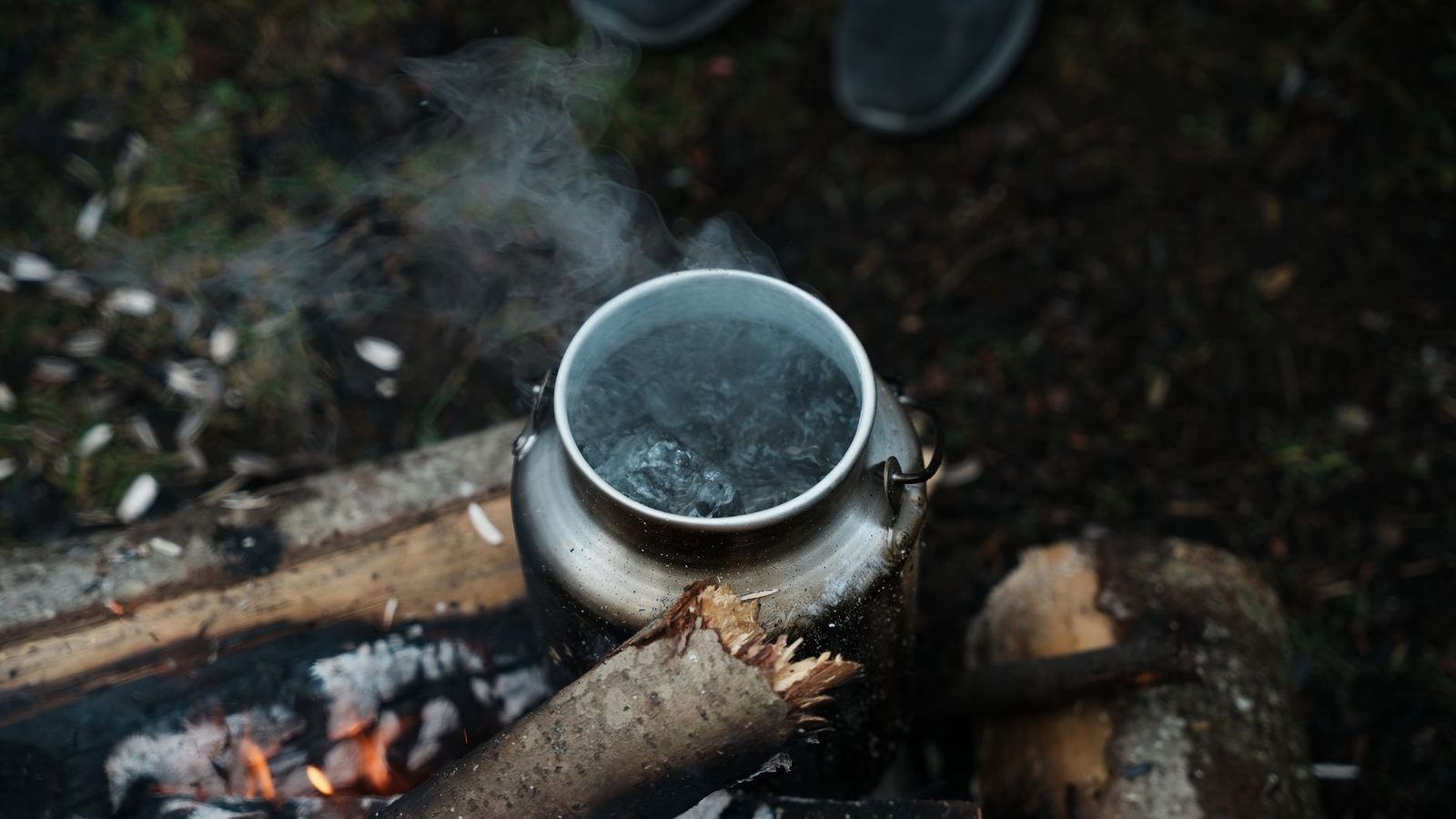
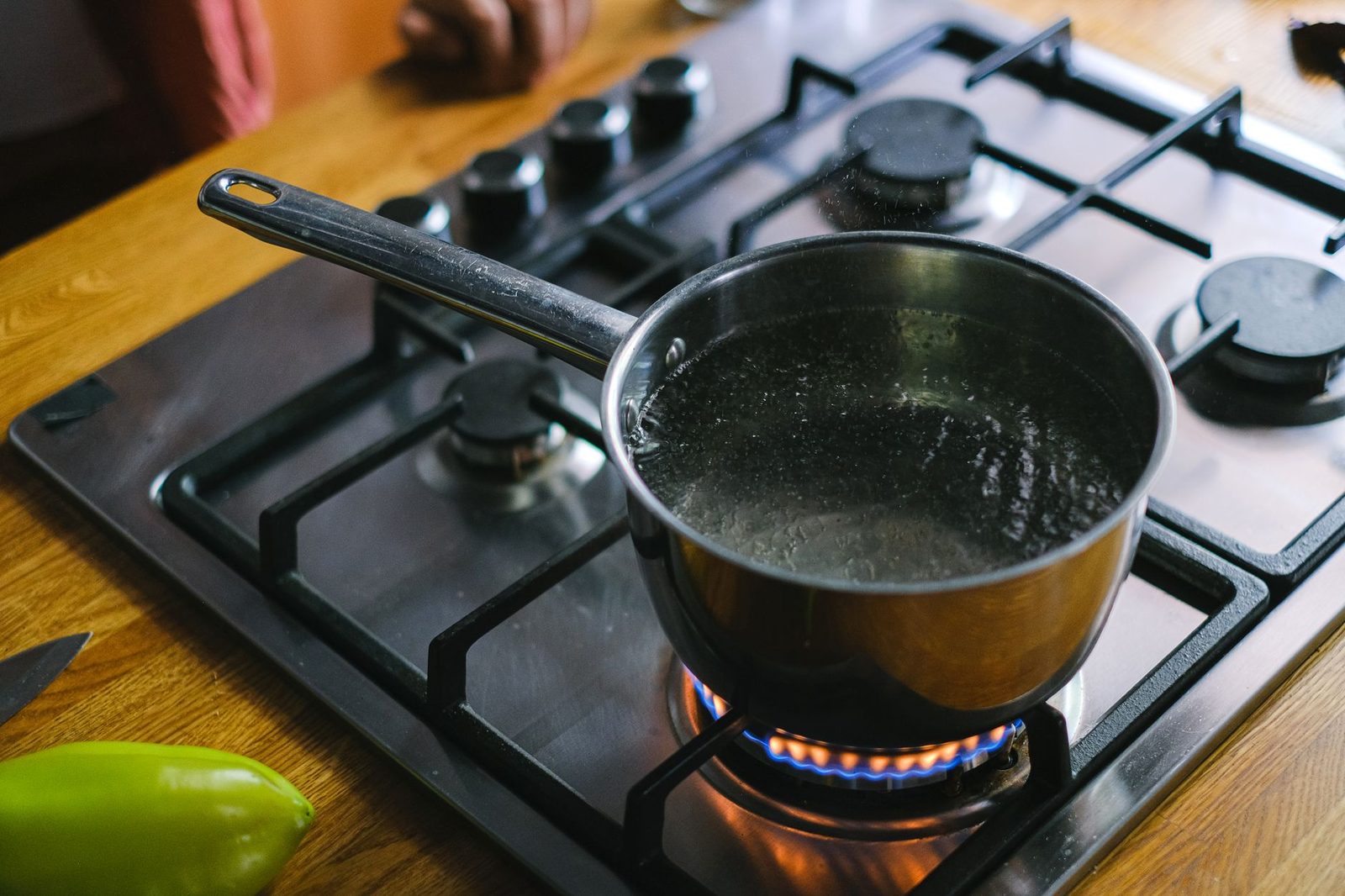
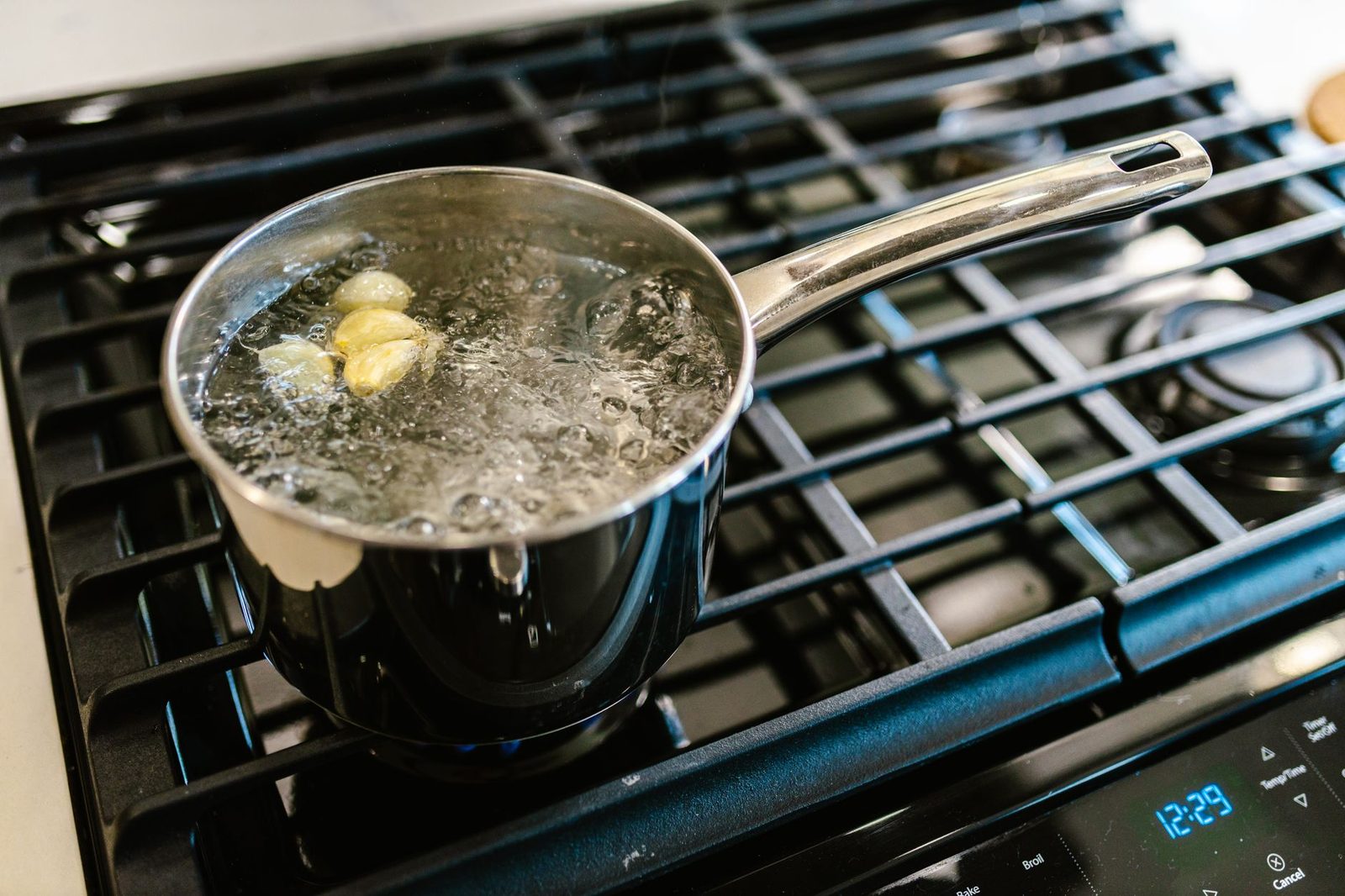
If the water is cloudy, let it settle, then strain it through a clean cloth, paper towel, or coffee filter. Bring it to a rolling boil. One full minute at a rolling boil kills the germs, per the EPA. Above 5,000 feet (about 1,000 meters), boil for three minutes. Let it cool on its own, then pour it back and forth between two clean containers to put some air back in. That fixes the flat taste, and a pinch of salt per quart helps too.
Boiling kills germs. It does not remove chemicals, so it is only the right tool when biological contamination is your worry.
Bleach, when you can't boil
Sometimes you cannot run a stove. No fuel, no fire allowed, you are in an apartment or a car. Household bleach does the same job.
Use only regular, unscented chlorine bleach. The label will list sodium hypochlorite, either 5.25 to 6 percent or 8.25 percent. Do not use scented bleach, color safe bleach, or anything with added cleaners.
The EPA dose: 8 drops of 6 percent bleach, or 6 drops of 8.25 percent bleach, per gallon of clear water. If the water is cloudy, colored, or very cold, double it. Stir and let it stand for 30 minutes. It is ready when it has a slight chlorine odor. If it does not, repeat the dose and wait 15 more minutes. If it still has no chlorine smell after that, Ready.gov says to dump it and find another source.
Two things catch people. Bleach loses strength, so use a bottle that has been kept at room temperature for less than a year. And count the actual drops with a clean dropper. Guessing is how you end up with water that is either still unsafe or foul to drink.
Distillation, for the chemical cases
Distillation is the one method that handles both problems. It kills germs and removes heavy metals, salts, and most other chemicals. It is slow and burns fuel, so it is for when you suspect chemicals, not an everyday method.
You can build a still with a pot and a cup. Fill a pot halfway with water. Tie a cup to the handle on the pot's lid so the cup hangs right side up when the lid is flipped over, and keep the cup from dangling down into the water. Boil for 20 minutes, and the vapor that condenses on the lid and drips into the cup is distilled water.
Know this method for the worst case: a flood that ran through garages and gas stations, a well near farm runoff, any source where you cannot rule out chemicals.
Filter first, then disinfect
A filter and a disinfectant are not the same thing, and you do not have to choose between them.
Filters remove sediment, cloudiness, and the larger parasites. Better ones take out bacteria and protozoa. Most household and camping filters do not reliably remove viruses, and none remove dissolved chemicals like salt or fuel unless they are built for it.
The clean habit, and the one Ready.gov recommends, is to combine them. Strain or filter the water first to clear it, then boil, bleach, or distill. The disinfection step is what makes it safe. A filter alone is not purification.
The order of operations
If you memorize one list, make it this one.
- Store first. A gallon per person per day, before you need it.
- Strain cloudy water. Let it settle, then run it through cloth or a coffee filter.
- Boil for one minute. Three minutes above 5,000 feet.
- Bleach if you can't boil. Count the drops, wait 30 minutes.
- Distill if chemicals might be present.
- Never skip disinfection.
Mistakes that get people sick
These are the common failures, so avoid them on purpose.
- Do not drink water with a fuel smell or an oily sheen, and do not expect boiling to fix it.
- Do not use scented, color safe, or "plus cleaner" bleach.
- Do not ration drinking water unless authorities tell you to. Drink what you need today and find more tomorrow.
- Do not swap coffee, soda, or alcohol for water. Caffeine and alcohol dehydrate you, which only raises your need for water.
Put it together
Purification matters, but it is the second layer. The first layer is a stored supply you can reach without thinking, and the third is a filter that clears the water before you treat it. Boiling, bleach, and distillation are the three methods worth knowing cold, because together they cover germs and, with distillation, the chemicals nothing else touches.